This walkthrough demonstrates how Large Language Models (LLMs), such as Claude, address critical challenges—specifically, generating SPARQL-queryable Knowledge Graphs from traditional SQL data sources like Microsoft SQL Server. In fact, the same process applies to any data source accessible via ODBC, JDBC, or HTTP. This approach enables SPARQL-based semantic exploration and dashboard creation over previously siloed data—for example, data managed by conventional SQL-compliant Relational Database Management Systems (RDBMSs).
Note: The Virtuoso platform used in this walkthrough is a multi-model DBMS that manages structured data represented as relational tables, RDF-based entity–relationship graphs, or documents comprising data in a variety of formats.
 Screencast Demo
RDF Linked Data Views over Microsoft SQL Server in action
Live link to the HTML page featured in the screencast. It showcases hyperlinks functioning as super-keys—each resolving to data in Microsoft SQL Server database tables, exposed through Virtuoso’s Virtual DBMS Layer via an ODBC connection.
 Screenshots
Dashboard View
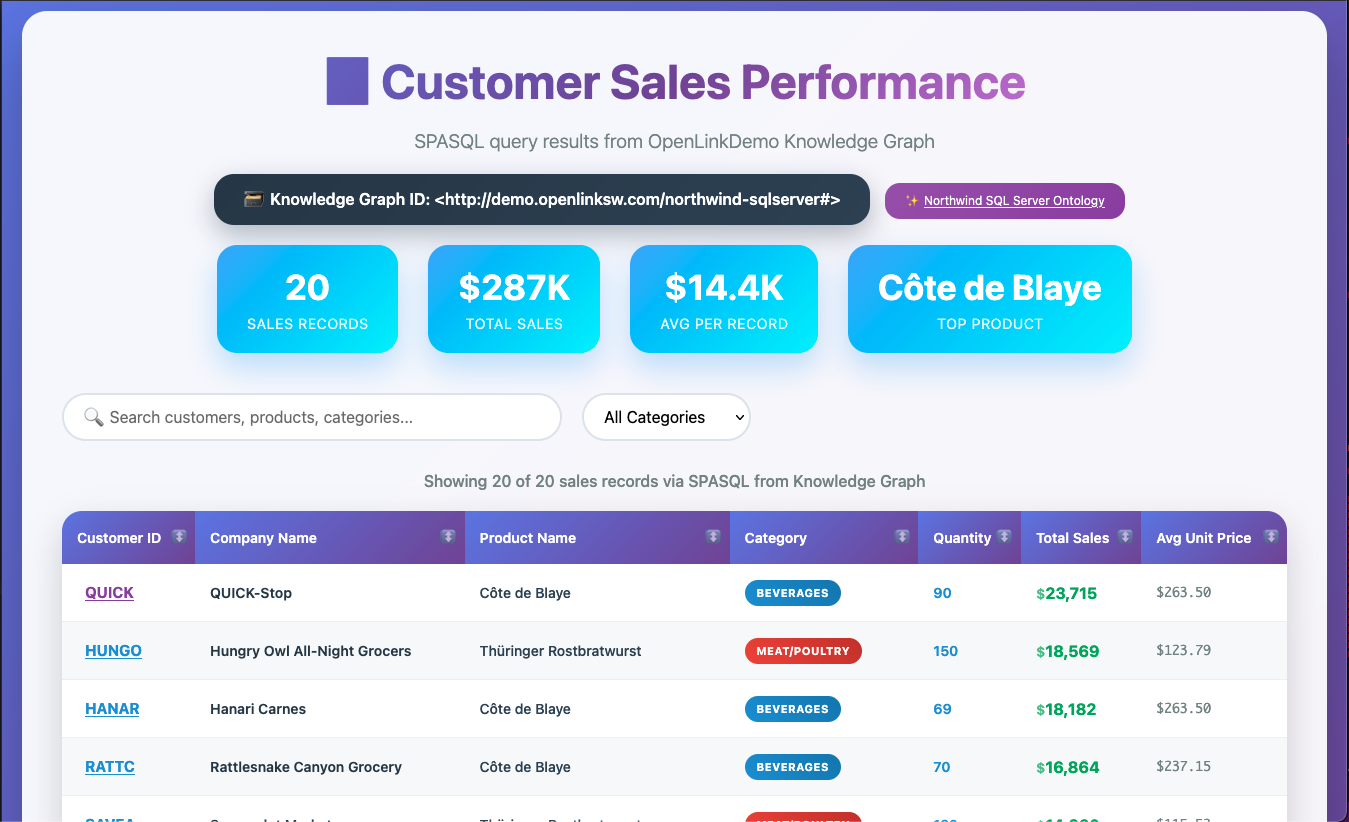
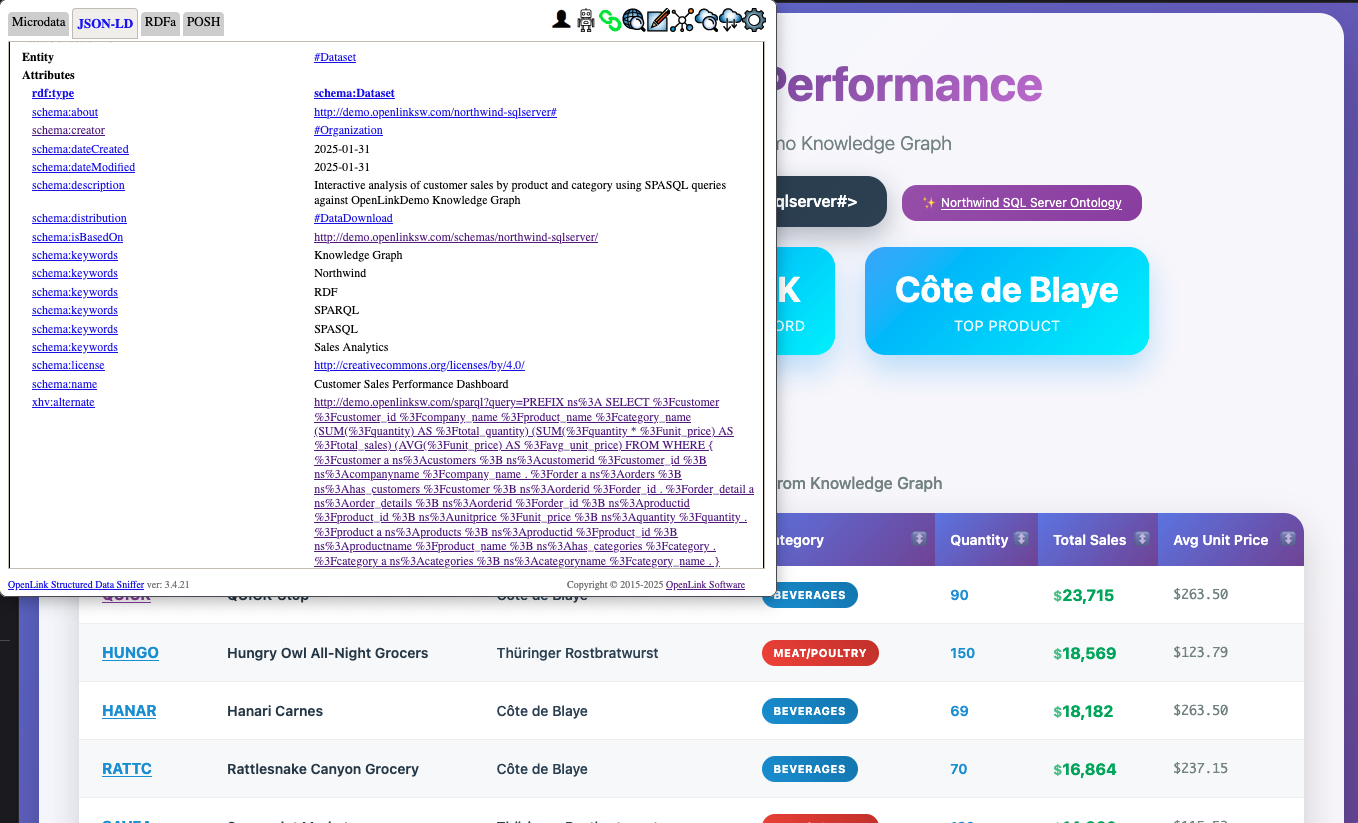
Dashboard with Embedded Metadata
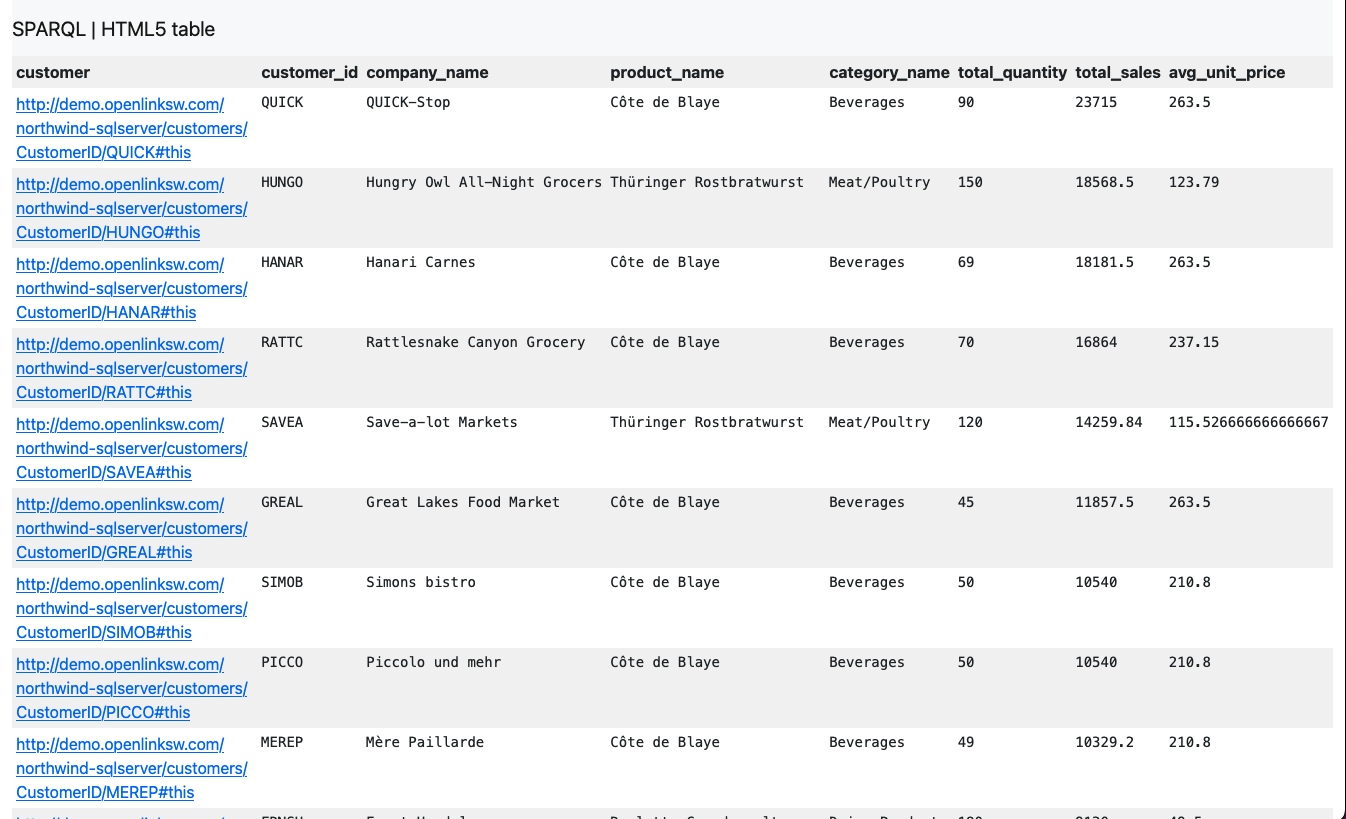
SPARQL Query Results Page
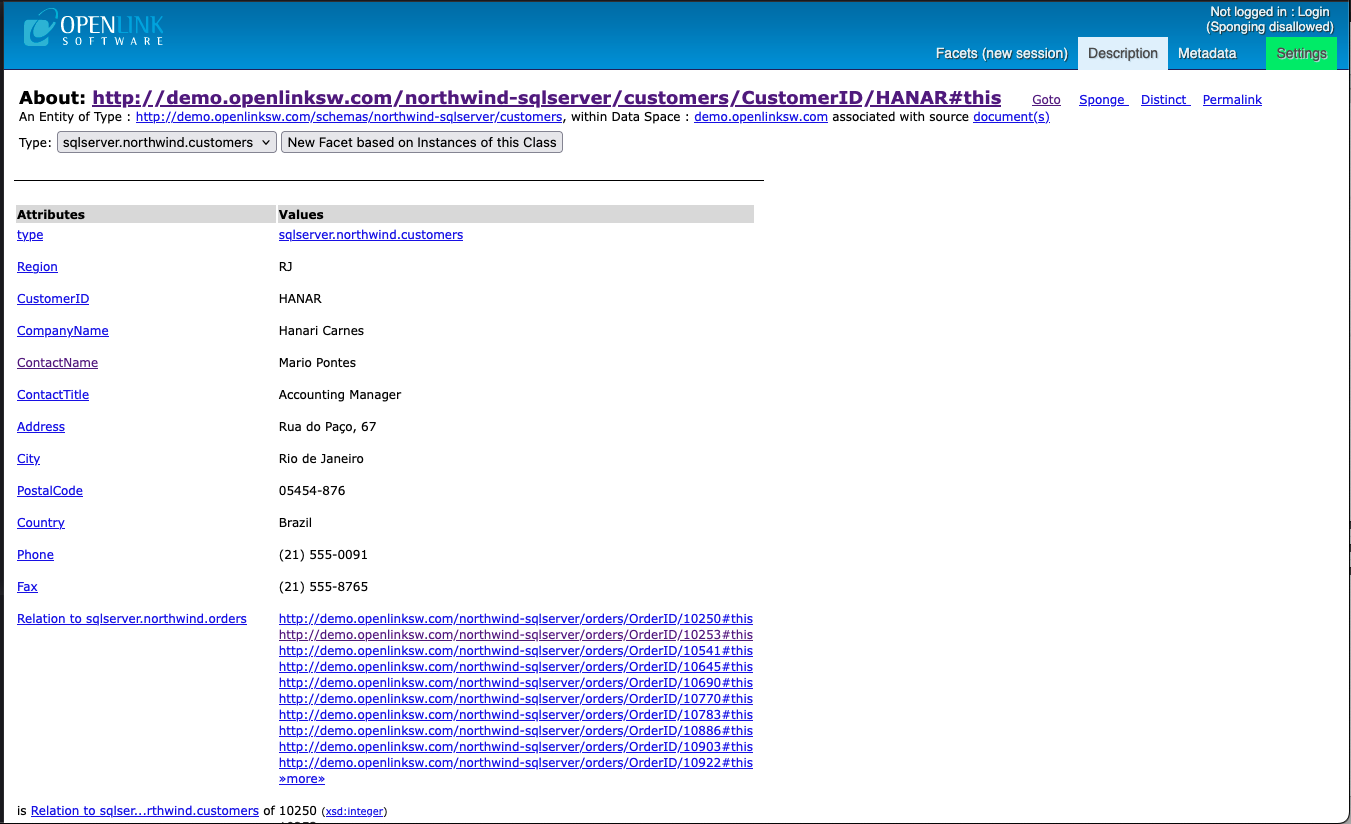
Entity Description Page
 Context: What’s New—and What’s Not
What I demonstrate in the screencast was entirely achievable—except for the hyperlink-based super-keys—using Microsoft Access during the PC client-server era that preceded the Web.
What Changed?
The Web introduced the internet-scale hyperlink—a universal connector with transformative potential for data integration. But that potential was never fully realized. Without broad, coordinated support from key players, tools like Access were left behind.
This created a gap in the Web era, which modern no-code platforms like Airtable and others attempted to fill—albeit without solving the crucial underlying data silo problem.
 Enter the AI Era
Today, we’re at the convergence of three forces:
- The usability and productivity of desktop-era tools
- The flexibility and reach of loosely coupled, Web-connected data
- The cognitive amplification of LLMs like Claude
This combination is a game-changer for data-driven applications and dashboards. It empowers both business users and technologists to create powerful, semantically harmonized views that bridge the gap between raw source data and actionable insights.
 Why It Matters
This convergence offers the key to addressing one of tech’s oldest and most expensive challenges: data silos—and the massive technical debt they accumulate.
Yes, DBMS, Warehouse, and Lakehouse vendors will try to distract and dazzle you with benchmarks (just like LLM vendors do today).
But stay focused on their fundamental role as data silo vectors!
 What truly matters: Flexible, secure access to your data—across all the silos you never intended to build.
 Technology Used
- Microsoft SQL Server — A traditional RDBMS serving as the source of structured enterprise data.
- ODBC / JDBC — Standardized connectivity interfaces enabling access to SQL Server and other data sources.
- OpenLink ODBC Driver for Microsoft SQL Server — Enables high-performance access from Virtuoso to the SQL Server source.
- Virtuoso Universal Server — A multi-model DBMS from OpenLink Software supporting SQL, SPARQL, RDF, and document views. It includes:
- Native support for Linked Data
- An integrated HTTP/SPARQL endpoint
- SPASQL — SPARQL embedded in SQL for seamless query integration
- OPAL (OpenLink AI Layer) — Acts as an MCP (Model Context Protocol) server, allowing LLMs like Claude to:
- Map relational database schemas to RDF classes and properties
- Submit SPARQL or SPASQL queries to Virtuoso-hosted RDF-based Knowledge Graphs
- Retrieve and reason over Knowledge Graph content
- Benefit from context-aware prompt structuring
- Claude — A conversational LLM by Anthropic used to:
- Interpret schema and metadata
- Generate SPARQL queries
- Assist in building dashboards
- Enable natural-language interaction with enterprise data
- SPARQL 1.1 — The W3C-standard query language for RDF, used for semantic exploration and integration.
- Linked Data principles — Applied to ensure data is addressable, queryable, and connectable across silos.
 Related